
Checking Criminal History in St. Gabriel
Begin with the office that created the record. The St. Gabriel Police Department is the logical source for its incident or arrest narrative. The city's Mayor's Court is the local source for a citation, traffic matter, or ordinance proceeding. The Iberville Parish Sheriff's Office supplies the parish-jail custody channel, while the Iberville Clerk of Court holds filed 18th Judicial District Court cases. Louisiana State Police BCII is the official route for reviewing one's own fingerprint-supported statewide history.
This five-part check keeps unlike records separate:
- Ask St. Gabriel Police or City Hall for the city incident or arrest report, using a report number when known.
- Call Mayor's Court with the citation number and defendant's legal name for a city traffic or ordinance file.
- Use the IPSO citizen app or parish prison phone line for a current or recent jail booking.
- Search the statewide clerk index, then request the district docket from the Iberville Clerk if charges were filed.
- Follow Louisiana State Police BCII instructions to review your own statewide record when a fingerprint-based history is needed.
A hit in one channel does not prove that every later step occurred. A booking is not a conviction, and a citation may never become a district case.
St. Gabriel Mayor's Court Versus District Court
St. Gabriel has a Mayor's Court under its Lawrason charter. That local forum is distinct from the 18th Judicial District Court in Plaquemine. The dividing line matters because a city traffic or ordinance matter may remain with Mayor's Court, while felony and district criminal prosecutions move through the Iberville Clerk. Searching the district index alone can therefore miss a valid city citation.
The St. Gabriel traffic portal offers payment and traffic-safety or online-education routes. Research did not confirm a full public criminal-case search there. Treat the portal as a citation-service gateway, not as a general criminal-history database. For a record or status question, contact the court rather than infer that an absent online result means no matter exists.
St. Gabriel Police Department Records
St. Gabriel Police creates the first local account of an event handled by its officers. That file may include an incident number, date, location, involved parties, alleged offense, responding officer, and narrative. A later jail entry and court case use other identifiers and are held by other custodians. Ask specifically for the police report when the narrative is the goal.
No official downloadable report-request form, public arrest blotter, or city crime dashboard was located. A practical request gives the event date and location, report number if known, the exact record sought, and a preferred copy format. City Hall is at 5035 Iberville Street, St. Gabriel, LA 70776, and its published phone is 225-642-9600. Published hours are 7:30 a.m. to 5:00 p.m. Monday through Thursday and 7:30 to 11:30 a.m. Friday. Confirm access, identification, fees, and delivery with the custodian because those report details were not published.
The Mayor's Court contact page confirms the city contact point. It can route a caller whose citation or report number does not appear online.
Why St. Gabriel's Portal Is Limited
The city's online portal is useful, but its purpose is narrow. It routes citation-related transactions and traffic education. It does not advertise a name-based sweep of police reports, arrests, or every Mayor's Court docket. Nor does it replace the district clerk, jail, or state repository.
When a citation is missing, first check the exact number and legal name. Then call the court and ask whether the matter is pending, entered under a different identifier, or handled outside the portal. If the event involved an arrest or a district-level charge, move to IPSO and the Iberville Clerk. This fallback is more sound than retrying a payment page as though it were a public docket.
The official portal source is shown below. Its visible transaction paths illustrate why a user must still call the city for a complete record question.
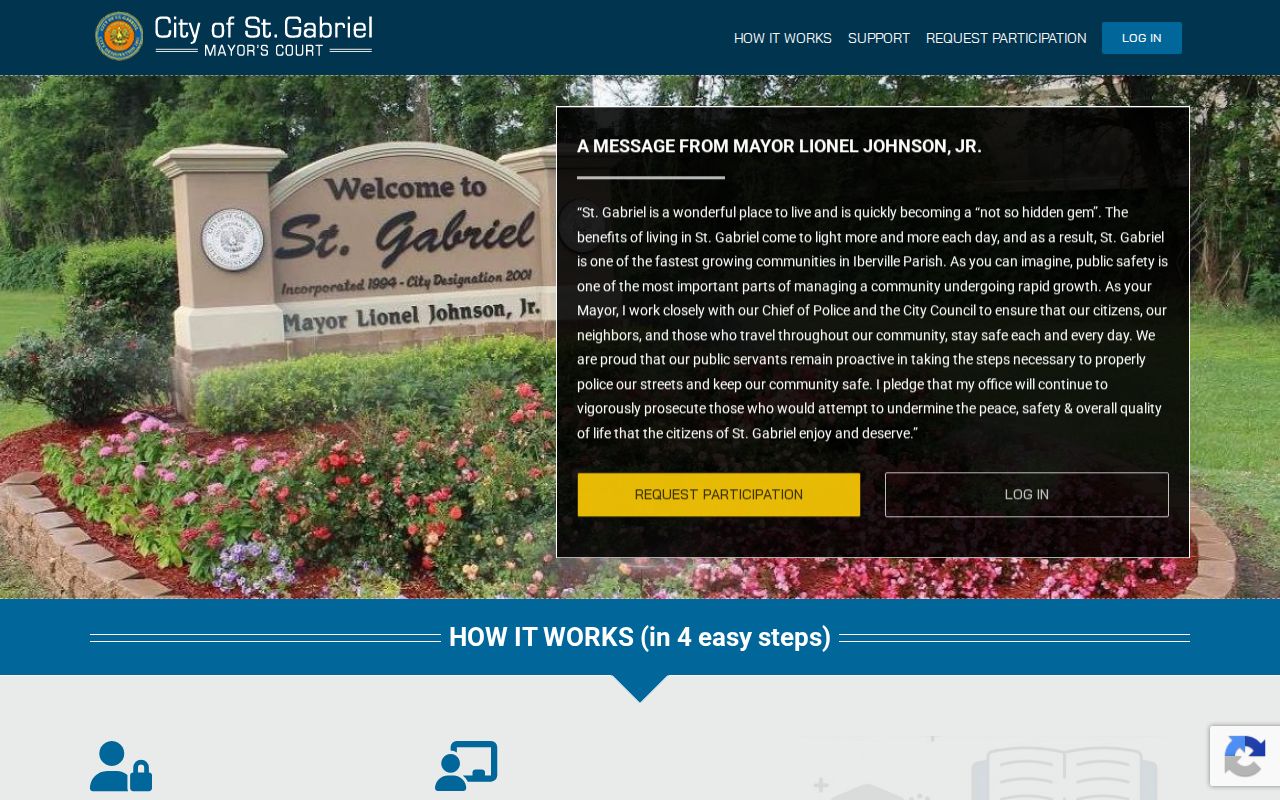
The portal belongs in a city citation search, while district charges and parish custody require different systems.
St. Gabriel Arrests and Bookings
A St. Gabriel arrest can create several records in sequence. Police produce the report. If booked into parish custody, IPSO creates the booking entry and intake data. If the district attorney accepts a district charge, the Iberville Clerk records the filed case, hearings, disposition, and sentence. These files may use a police report number, booking number, and court case number for the same event.
IPSO advertises inmates and recent arrests through its free citizen app rather than a conventional desktop roster. Call the Iberville Parish Prison at 225-687-3553 when the app is unavailable or when current custody needs confirmation. The app entry is a timely custody lead, not a certified record and not proof of guilt. For the arrest narrative, return to St. Gabriel Police. For a filed outcome, use the clerk.
St. Gabriel sits on Iberville's east bank, while the district courthouse is in Plaquemine. That geography helps explain why local police and Mayor's Court may be the first contact even though a later district file is held across the parish.
St. Gabriel's Newer Record Custodian
St. Gabriel incorporated in 1994 and attained city status in 2001. Those milestones created a municipal layer within a parish whose district court and clerk functions predate the city. They also help explain why records from a city event can split between a newer local custodian and long-standing parish institutions.
The 2020 Census counted 6,433 residents, making St. Gabriel Iberville's largest incorporated municipality at that official comparison point. Population does not change access law, but it reinforces why the city's own police and court contacts are meaningful starting places. A request should still follow the record, not merely the person's home address.
Municipal Court Records in St. Gabriel
Mayor's Court is the first city channel for traffic citations and ordinance matters. A docket may identify the citation or case, party, alleged violation, scheduled event, payment or course status, and final action when public. The city has not published a complete field list, public docket database, copy fee schedule, or certified-copy process.
| Court Name | City of St. Gabriel Mayor's Court |
|---|---|
| Case Types Heard | City traffic citations and ordinance matters within local jurisdiction |
| Case Lookup Channel | Traffic portal for supported services; City Hall or Mayor's Court by phone for record questions |
| What the Docket Shows | Citation identity, party, events, status, and outcome to the extent public and maintained |
| Copies & Fees | No official city schedule located; ask the court about inspection, copies, certification, and payment |
The city portal lists vendor support at 337-362-2470, but the City Hall number is the proper local contact for custody of a Mayor's Court record. Do not assume vendor support can certify a city file.
The official court contact source appears below and confirms where city-level questions should begin.
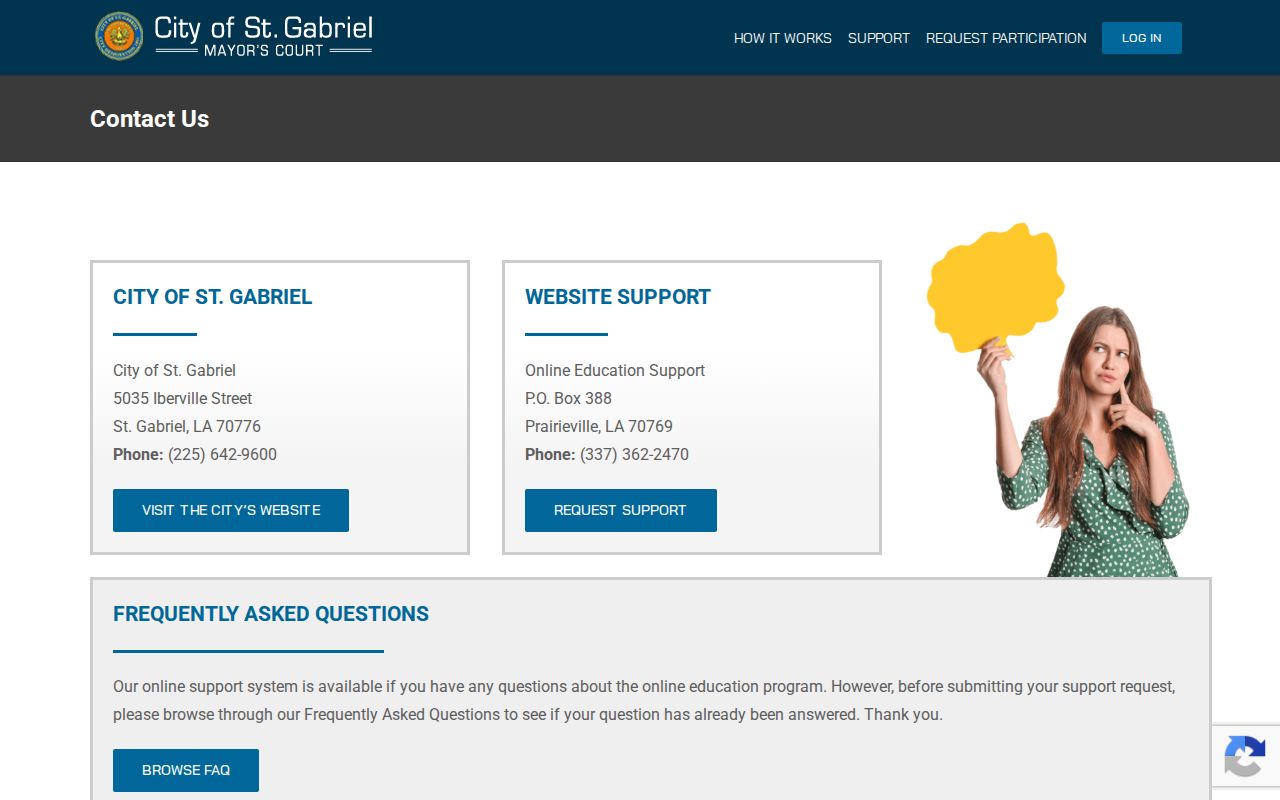
This contact route bridges the gap when the transaction portal does not expose a citation record.
Reading a St. Gabriel Record
A police report, booking entry, court docket, and statewide history answer different questions. The report records the officer's account and alleged offense. A booking entry documents intake, custody, charges received, and release or bond data. The court file shows what prosecutors filed and what the court did. LACCH compiles fingerprint-supported arrest cycles and reported dispositions.
- Booking charge
- The allegation received by the jail at intake; it may later change.
- Filed charge
- The count placed before the district court by bill of information or indictment.
- Disposition
- The result for a count, such as dismissal, acquittal, or conviction.
- Attachment
- A court command tied to appearance or compliance; access can be limited while active.
Compare the legal name, dates, agency, and event numbers before concluding that two entries describe the same matter. For self-review, a certified district disposition is stronger correction evidence than a screenshot.
Where St. Gabriel Records Go
City police material remains with the city custodian, while related custody and prosecution records move through parish institutions. Fingerprints from a qualifying booking can feed Louisiana's repository, and a final district disposition should later be reported. Timing and matching gaps mean those systems may not update together.
Record flow: St. Gabriel Police Department › Iberville Parish booking and 18th Judicial District Court › Louisiana State Police BCII-LCJIS
For very recent activity, start with police and IPSO. For charges and outcomes after filing, use the Iberville Clerk and LCRAA statewide index. To review a statewide fingerprint-supported history about yourself, follow BCII-LCJIS instructions. A missing disposition should be checked against the court's certified file before seeking a repository correction.
St. Gabriel Probation Records
Probation and parole are state-run adult supervision functions in Louisiana, not Mayor's Court record products. The DPS&C Division of Probation and Parole explains its statewide structure. Confirm the assigned Region 2 field office because the public facility list does not clearly map Iberville to one office.
The official supervision source is pictured below. It provides statewide context but should not be read as a city arrest log or court disposition.
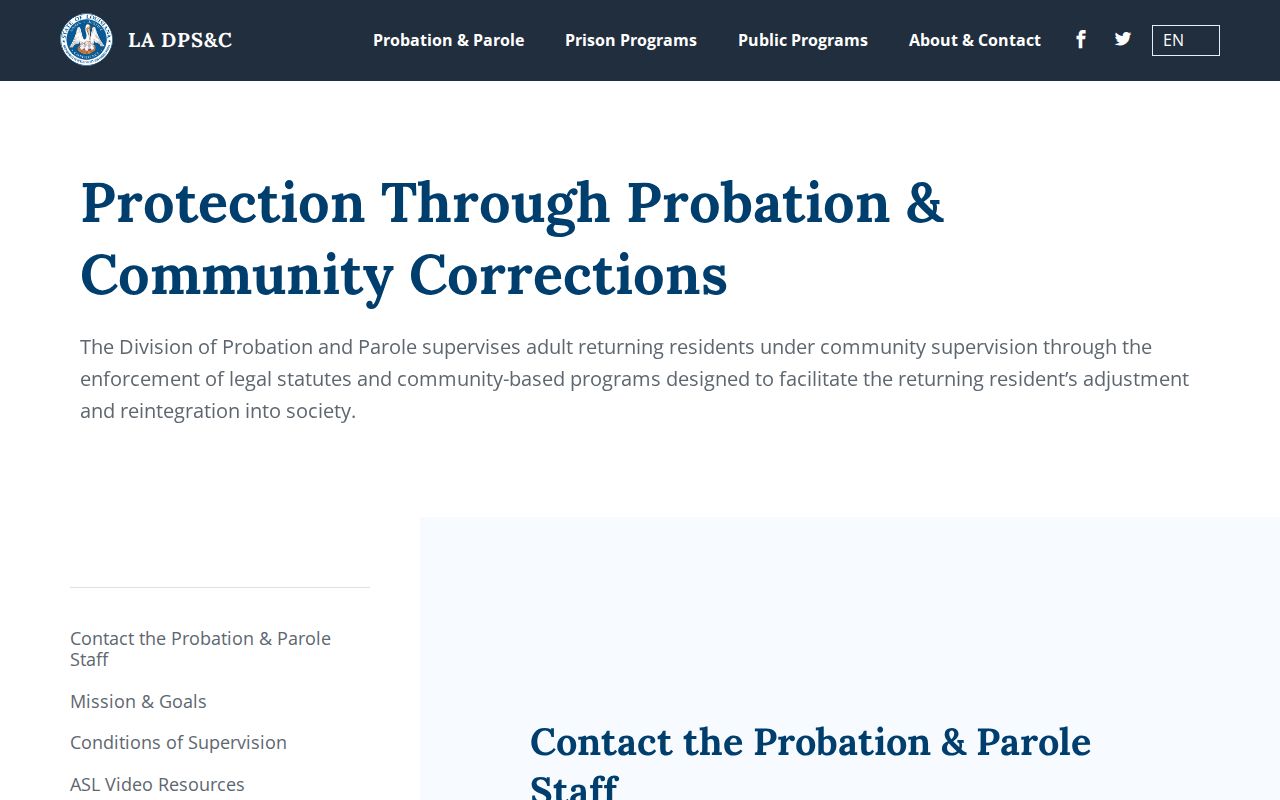
Use the district court file for the sentence and the state supervision channel for current public supervision information.
Public Access Rules in St. Gabriel
Louisiana law directs a request to the custodian that holds the file. St. Gabriel Police controls its own reports, Mayor's Court controls its municipal files, IPSO controls sheriff and jail material, and the Iberville Clerk controls district court proceedings. Ask for a reasonably specific record and request nonexempt portions if part of a file is withheld.
The Louisiana public-record definition is illustrated below. It supports access to records used in public business unless another law restricts them.
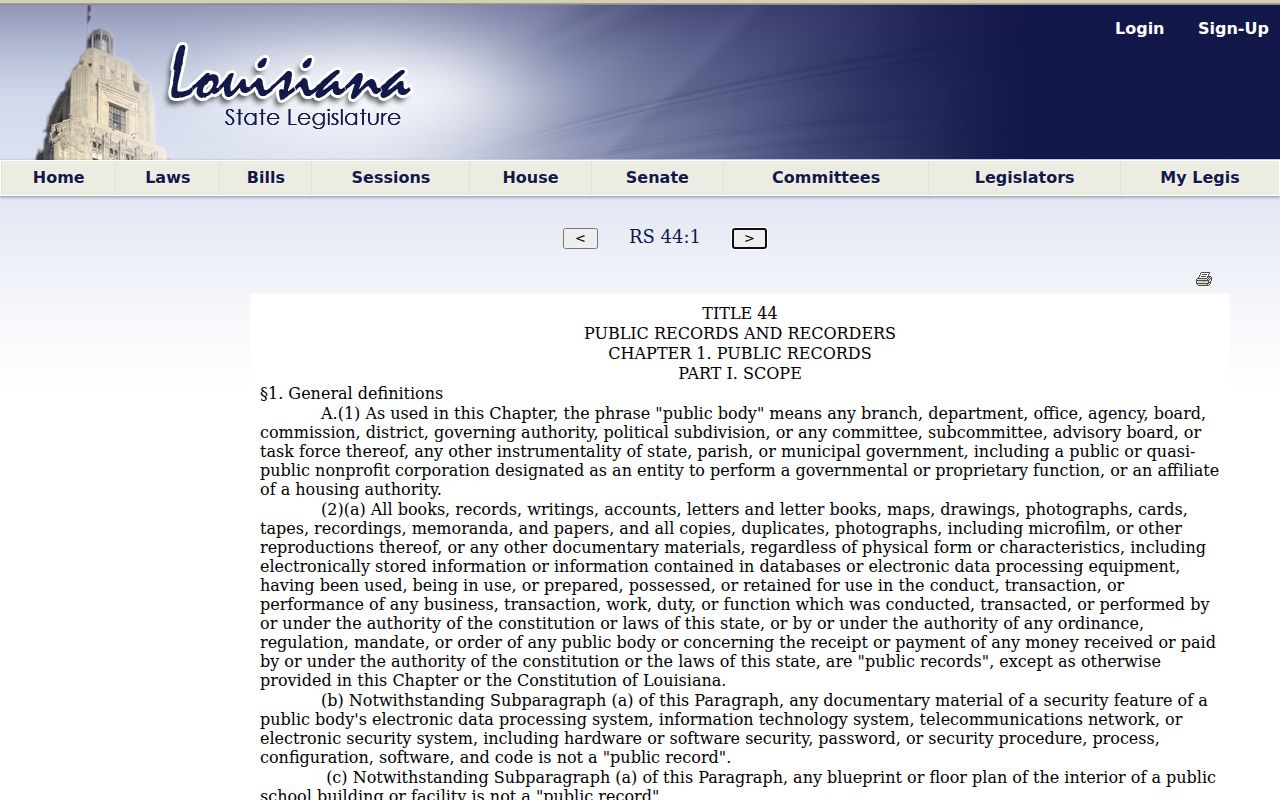
That broad rule works with specific limits for criminal investigations and prosecutions.
The law-enforcement exemption source appears below. It explains why some pending or sensitive material may remain closed even when basic public fields can be released.
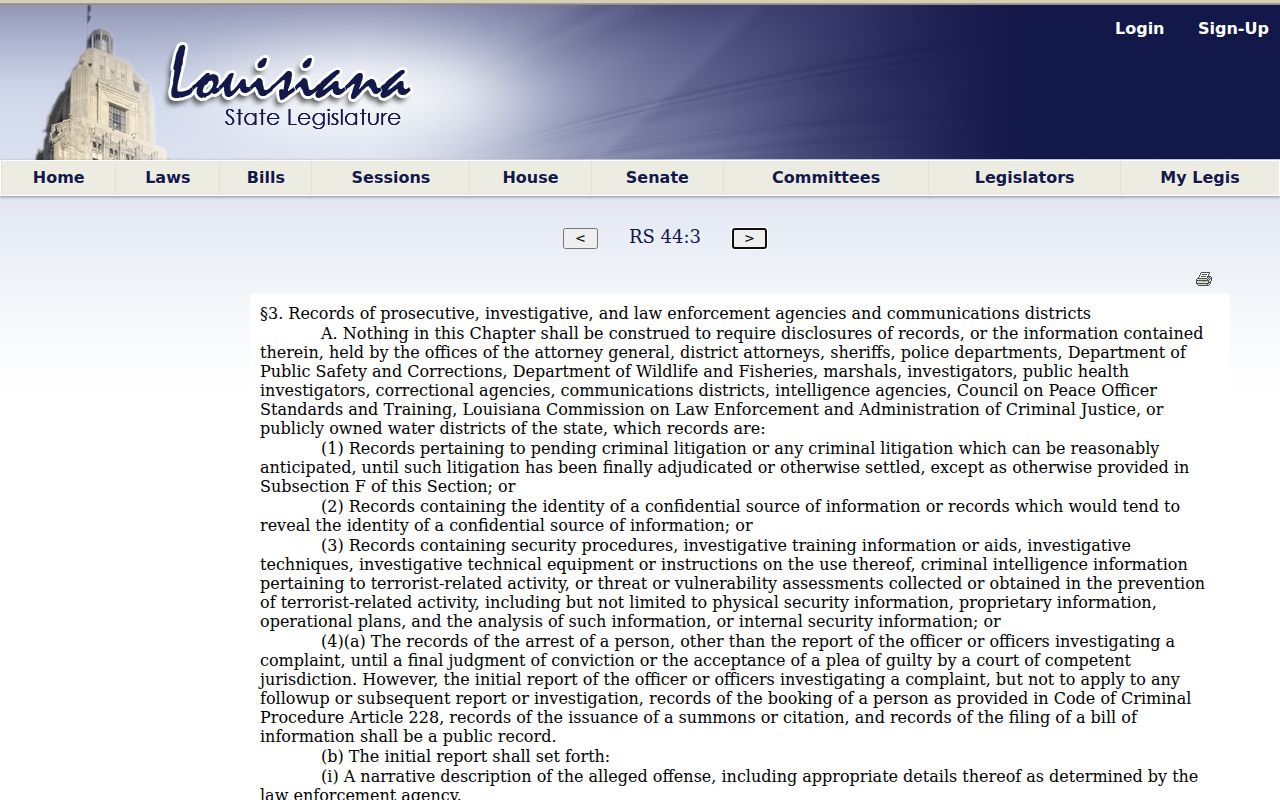
Ask the custodian to cite the legal basis for a denial and to separate releasable portions where possible.
Key Statutes:
Louisiana Public Records Law, R.S. 44:1 defines public records and custodians.
R.S. 44:3 protects specified pending-investigation, prosecution, and sensitive law-enforcement material.
R.S. 44:36 sets general and criminal-justice retention rules.