
Checking Criminal History in Iberville Parish
There is no unrestricted Louisiana State Police portal for searching another person by name. A practical Iberville search starts with the Louisiana Clerks Remote Access Authority statewide index, selecting Iberville Parish and looking for an 18th Judicial District Court case. The free index can identify a case, while subscribed document functions and images may differ by parish and account.
Collect the legal name, spelling variants, approximate arrest or filing date, and any known case or booking number. Use only enough identifying information to distinguish the correct person. A name hit is a lead, not a final conclusion, because booking charges may change when the district attorney files a case.
- Search the LCRAA index by name with Iberville Parish selected, or start with the case number when it is known.
- Note the case number, division, filing date, and status without assuming that a matching name proves identity.
- Request the docket, minutes, disposition, or certified document from the Iberville Parish Clerk of Court.
- Use the Iberville Sheriff app or jail telephone line for a current booking, then compare it with the later court file.
- For your own statewide fingerprint record, follow the current Louisiana State Police BCII instructions instead of relying on a court-name search.
One Courthouse, Several Record Custodians
Iberville Parish government identifies the courthouse at 58050 Meriam Street in Plaquemine, but the building does not turn every criminal record into one unified file. The Iberville Parish Clerk of Court keeps 18th JDC criminal proceedings. The sheriff holds its incident and custody records, the district attorney holds prosecution material, and municipal courts retain their own traffic and ordinance matters.
The official parish government page provides the civic setting for this local system.

The courthouse image points to the local judicial center, but readers still need to direct each request to the custodian that prepared or controls the requested record.
Louisiana Official Background Checks
The Louisiana State Police Bureau of Criminal Identification and Information, part of LCJIS, maintains the Louisiana Computerized Criminal History system. LACCH can contain arrests, arrest dispositions, probation or parole bookings, and incarceration information for people arrested in Louisiana. Access depends on legal authorization; BCII does not advertise an unrestricted public product for searching anyone by name.
For self-review or an authorized statutory purpose, follow the current BCII instructions. An FBI Identity History Summary is a separate, subject-only federal product that requires fingerprints and an $18 FBI fee, plus any collection or channeler charge. Neither product replaces the Iberville court docket when the question is what a judge decided.
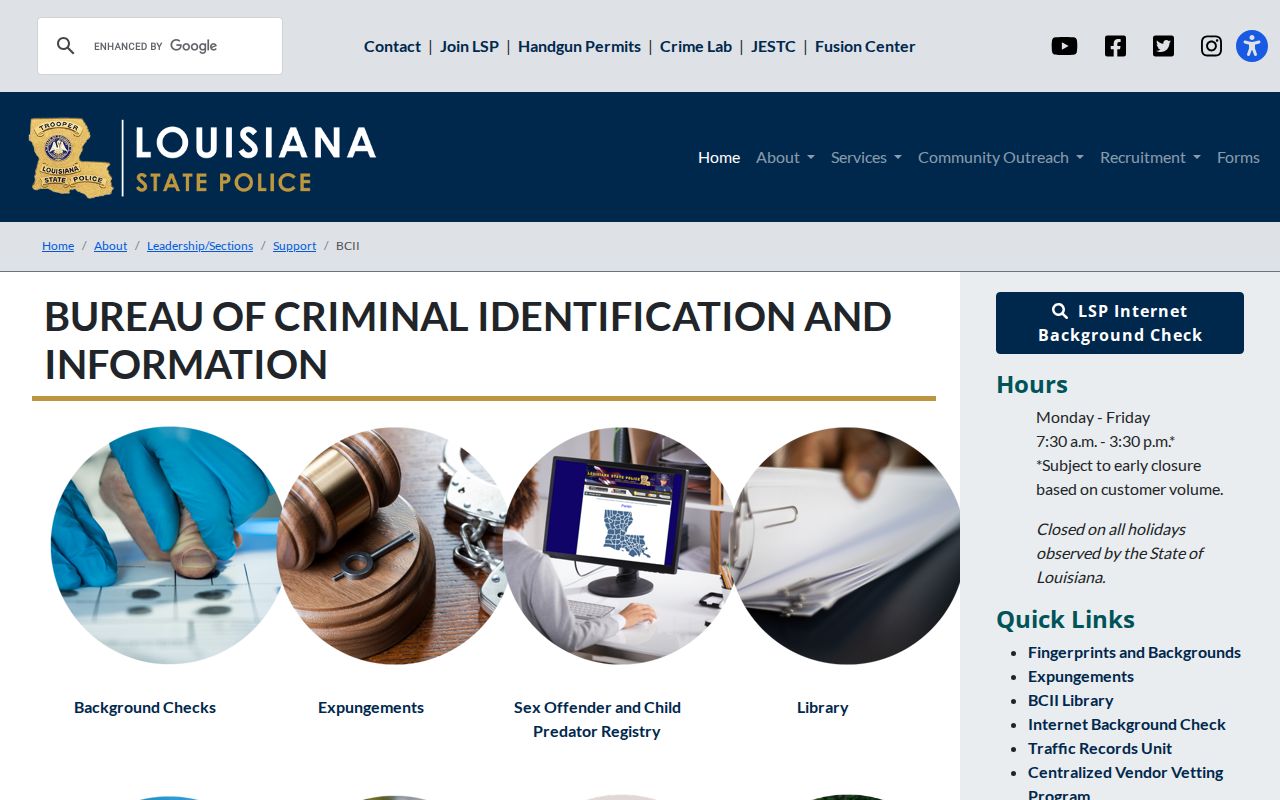
BCII is the repository route for a fingerprint-linked Louisiana history, while the clerk remains the source for an Iberville judgment or certified disposition.
Iberville Fingerprint Access Requires Verification
No official LSP-approved fingerprint enrollment site within Iberville Parish was located in the research. State headquarters functions are nearby in Baton Rouge, but that does not establish walk-in availability for every purpose. Applicants should use the current BCII form and instructions for the authorization that applies to them before choosing a collection site.
The State Police fingerprint page explains the state channel and purpose-specific requirements.
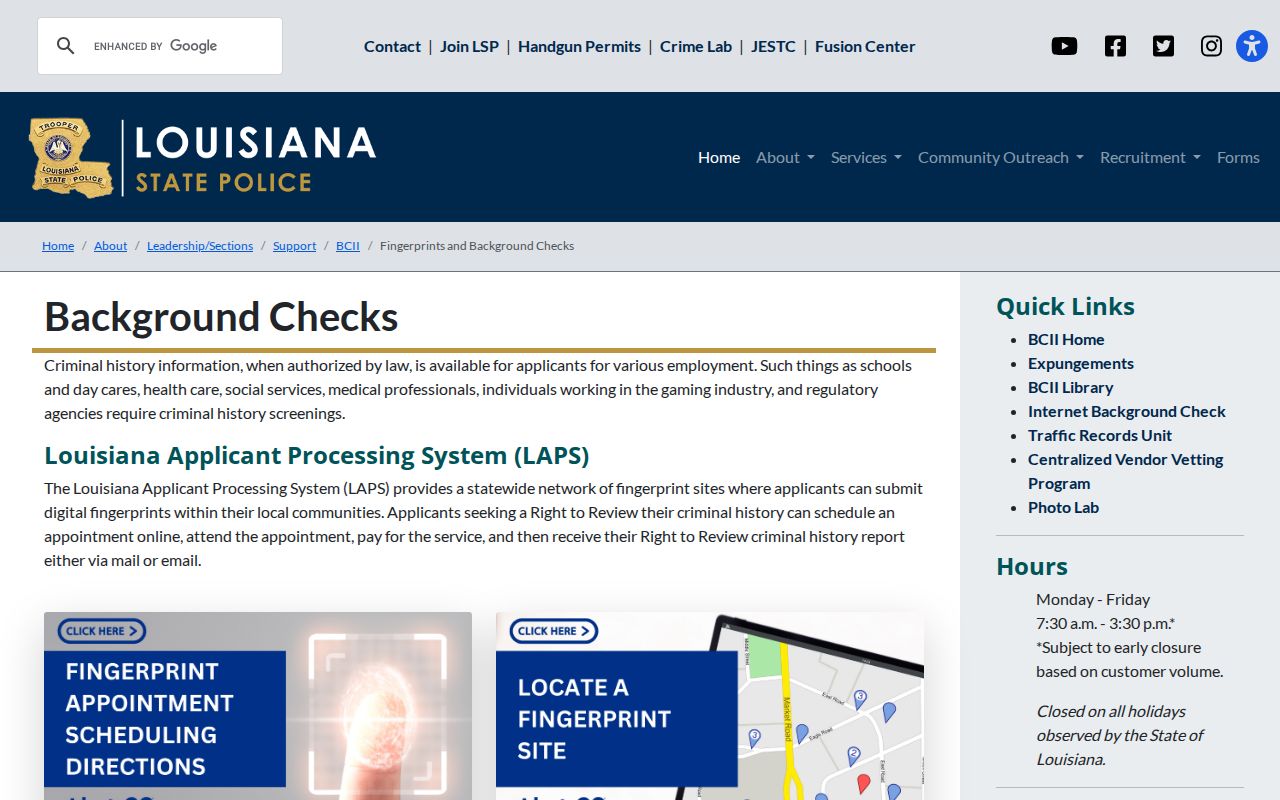
Local sheriff or police fingerprint availability and fees were not published in the official sources reviewed, so calling first avoids assuming a service or price.
Criminal Record Types
A single Iberville event can produce records at several stages. Police create an incident or arrest narrative. The jail records booking intake. Fingerprints can update LACCH. A prosecutor may then file a different charge in the 18th JDC, where the clerk records pleas, motions, judgment, sentence, and costs. Mayor's courts can keep municipal ordinance or traffic matters outside that district-court path.
Custody, supervision, registry, and federal records have still other custodians. The safest method is to name the exact record needed rather than ask an office for a broad “background check” it may not provide.
- Incident and arrest reports: agency narratives that may be restricted while litigation or investigation remains pending.
- Booking records: jail intake data showing custody and allegations, not guilt.
- District case files: the filed counts, events, per-count dispositions, judgment, and sentence held by the clerk.
- LACCH histories: fingerprint-linked state compilations whose public release is limited by law.
- Corrections and registry records: separate public systems for state custody, supervision, or statutory registration.
The Iberville Sheriff App Fills a Web Gap
The Iberville Parish Sheriff's Office does not publish a conventional desktop jail roster in the official pages reviewed. Instead, its official site promotes a free citizen-alert app with “inmates” and “recent arrests” functions. Those app results are immediate custody leads. They do not establish that the district attorney filed the same charge or that a conviction followed.
The official sheriff site also distinguishes this record-access app from Digital Siren, a road and emergency warning service.

For current jail information when the app is insufficient, the official DPS&C parish listing gives the Iberville Parish Jail telephone number as 225-687-3553.
Inside an Iberville Parish Criminal Record
The fields depend on the source. A fingerprint-linked LACCH cycle can connect an arrest agency and date to charges, a court tracking number, disposition, sentence, incarceration, and supervision. An Iberville district case instead centers on a caption, case number, division, filed counts, counsel, hearings, minute entries, judgment, and sentence. Missing or unmatched dispositions can make the systems disagree.
| Name & Identifiers | Legal name, aliases, birth details, and authorized state or FBI identifiers. |
|---|---|
| Arrest / Booking Data | Agency, date, booking number, fingerprint transaction, and intake charges. |
| Charges & Statutes | Alleged arrest offenses and the counts later filed or amended in court. |
| Disposition | The result for each count, such as dismissal, conviction, acquittal, or nolle prosequi. |
| Sentence | Judgment, incarceration, probation, fines, costs, or other ordered terms. |
| Custody / Supervision Status | Jail custody, state imprisonment, release information, probation, or parole data. |
Reading the LCRAA Statewide Index
Iberville Clerk links to LCRAA as a free statewide index search. Account roles, participating parishes, and image access can vary, so the index should not be described as a universal document library. It is most useful for finding the local file identifier that lets the clerk retrieve the underlying docket or document.
| Parish | Select Iberville to focus on the local clerk index. |
|---|---|
| Name or party | Try the legal name and reasonable spelling variants. |
| Case or instrument number | Use this for the strongest exact match when known. |
| Record type and dates | Narrow common names and unrelated filings. |
| Account sign-in | May be required for subscribed or image functions. |
A blank result can reflect spelling, recent intake, older paper coverage, municipal jurisdiction, restricted records, or participation limits. Call the clerk before concluding that no case exists.
Once a likely file appears, read the filed charge and the final disposition together. A bill of information or indictment may differ from the offense entered during jail intake, and a case with several counts can end differently on each count. Scheduled hearings and warrant entries are events, not outcomes. When the result will be used to correct a personal LACCH record, ask whether the clerk can provide a certified disposition rather than saving only an index screen.
Public Access Laws in Louisiana
Louisiana Public Records Law begins with records prepared, possessed, or retained for public business, but statutory and constitutional exceptions still control. Requests go to the custodian with custody or control, which is why an IPSO report request, municipal police request, clerk document request, and corrections request follow separate routes.
Key Statutes:
R.S. 44:1 defines public records, public bodies, and custodians.
R.S. 44:3 protects specified law-enforcement material, including records tied to pending or reasonably anticipated criminal litigation.
R.S. 44:36 establishes retention rules, including special periods for prosecution and corrections material.
C.Cr.P. art. 971 explains that expungement removes public access without destroying the record.
River Communities Split the Record Trail
Iberville's communities line both sides of the Mississippi River, and municipal authority adds another division. St. Gabriel Police, Plaquemine Police, and White Castle Police create their own incident or arrest reports. St. Gabriel and White Castle also have mayor's-court functions for municipal matters. Those cases may not appear as ordinary 18th JDC results.
The parish local agency directory helps identify the municipal office connected to an event.
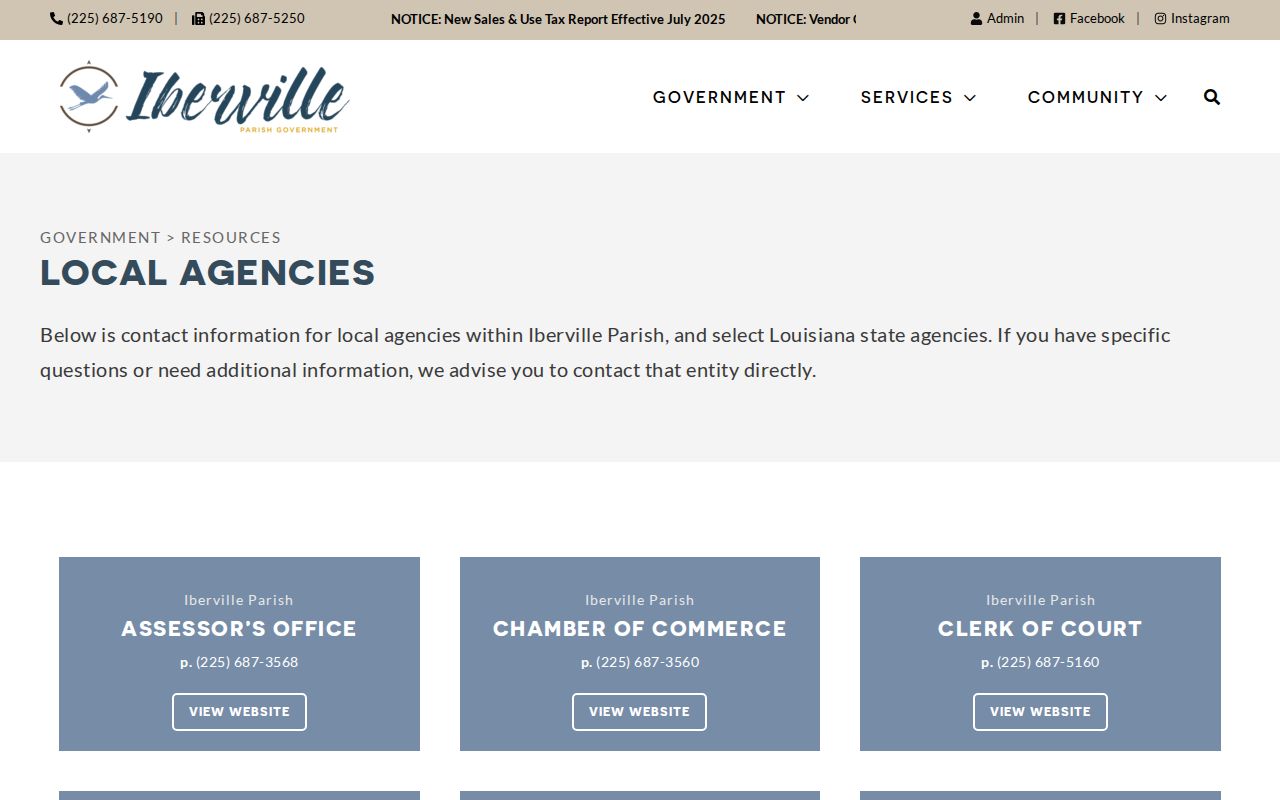
When a name search fails, ask whether the event was a city citation, parish booking, district prosecution, or state custody event before changing spellings repeatedly.
St. Gabriel City Hall and Mayor's Court use 5035 Iberville Street and the city lists telephone 225-642-9600. Plaquemine City Hall lists 23640 Railroad Avenue and 225-687-3116. White Castle Police lists 32535 Bowie Street and 225-545-2484. These contacts are useful routing points, but no official public police blotter or complete municipal case-search database was located for the three cities. Provide a citation or report number when known and ask what copy or certification procedure applies.
Sealed, Expunged, and Restricted Records
Louisiana expungement removes qualifying arrest and conviction information, photographs, fingerprints, dispositions, and related material from public access but does not destroy the record. Authorized law-enforcement and criminal-justice users, along with other entities named by law, can retain access. Juvenile, judicially sealed, victim, medical, and other protected content also does not operate like an ordinary public file.
Iberville filing goes through the court that possesses the record. The clerk publishes allocations per arrest date of $200 to the clerk, $250 to State Police, $50 to the district attorney, and $50 to the sheriff. DWI matters add $50 to DPS&C. The published total is therefore $550 ordinarily or $600 for DWI, paid by money order or cashier's check. Eligibility under article 978 is fact-specific and the ten-year provision is not universal.
Iberville Search and Expungement Costs
Published charges distinguish a simple clerk name search from the multi-agency expungement process. Copy and certification prices were not published on the criminal department page, and the current BCII fee depends on the form and statutory purpose. Ask for a quote before ordering an image set or certified packet.
| Clerk criminal name search | $20 per name; money order or cashier's check. |
|---|---|
| LCRAA index | Free index advertised; account or image functions may cost. |
| Ordinary expungement allocation | $550 per arrest date under the clerk's published breakdown. |
| DWI expungement allocation | $600 per arrest date because DPS&C receives an added $50. |
| FBI Identity History Summary | $18 to the FBI, with collection or channeler fees separate. |
Iberville Parish Criminal Records by City
The top three incorporated cities identified in the research are St. Gabriel, Plaquemine, and White Castle. Their police departments can hold local incident and arrest reports, while mayor's courts in St. Gabriel and White Castle handle certain municipal matters. Parish-jail custody still routes to IPSO, and felony-level 18th JDC prosecutions route to the Iberville Clerk.
St. Gabriel Criminal Records
Police reports and Mayor's Court traffic or ordinance files begin with separate city offices.
Plaquemine Criminal Records
The parish seat has its own police department and places the 18th JDC clerk nearby.
White Castle Criminal Records
Town police and the statutory Mayor's Court maintain distinct municipal records.
State Custody Starts With DPS&C
A person who has moved from parish detention into a Louisiana sentence belongs in a different search channel. The Department of Public Safety and Corrections locator covers sentenced state prisoners and people on state probation or parole. Its telephone method at 225-383-4580 requires a DPS&C number or a name plus date of birth and can provide housing assignment, facility contact details, and projected release information where applicable.
The Louisiana corrections site is the official starting point for state custody and supervision.

Louisiana VINE can add custody notifications, but it does not replace the clerk's disposition or the official DPS&C record.
Federal custody belongs in a fourth channel. The Bureau of Prisons locator covers federal prisoners, while PACER holds federal dockets for the U.S. District Court for the Middle District of Louisiana. Neither system is an Iberville jail roster. A person can therefore have an IPSO booking, a Louisiana state custody entry, or a federal custody result, and the absence of one says nothing conclusive about the others.
Act 352 Changed 2026 Filing Practice
The Iberville Clerk announced that Act 352 of the 2025 Legislature became effective January 1, 2026 for civil and criminal pleadings and linked readers to further details. Anyone submitting a pleading should consult the clerk's current notice rather than rely on an older filing routine. The change matters to filing procedure, not to whether a public record proves guilt.
Recent records can also lag between arrest, prosecutor screening, filing, and index publication. When timing matters, ask the clerk whether a pleading has reached the official docket and request the minute entry or filed document that answers the question.